Things to do nearCharleston City Hall
Charleston City Hall, located in the heart of downtown South Carolina, draws visitors with its neoclassical architecture, storied political history, and a remarkable collection of early American portraiture.
Charleston City Hall has occupied its prominent corner at 80 Broad Street since 1801, originally constructed as a branch of the First Bank of the United States before the city took ownership and adapted it for municipal use in 1818. The building was designed in the Adamesque or Federal style, an architectural language popular in the early republic that favored restrained ornamentation, elliptical windows, and carefully proportioned facades. Over the decades, the structure has survived earthquakes, hurricanes, and the upheavals of the Civil War, emerging as one of the most intact examples of early civic architecture in the American South.
The Council Chamber on the second floor is the building's crown jewel, a room lined with portraits commissioned to honor figures who shaped the city and the nation. The Trumbull portrait of Washington, painted from life, is the most celebrated of these works, but the surrounding collection of paintings depicting mayors, governors, and local dignitaries forms a visual chronicle of Charleston's civic identity stretching back to the colonial era.
Visitors are welcome to tour the public areas during regular business hours, and the experience feels less like a museum visit and more like stepping into a working institution that has simply never stopped accumulating history. The building sits within easy walking distance of the Old Exchange and Provost Dungeon, St. Michael's Episcopal Church, and the Battery, making it a natural anchor for a deeper exploration of the city's historical core. Charleston City Hall rewards the curious traveler who wants to understand a city not only through its architecture but through the people and decisions that shaped it across three centuries.
7-day forecast
Tips for visiting Charleston City Hall
Visit on a weekday morning when the building is open to the public and foot traffic is lightest, giving you more room to take in the Council Chamber at your own pace.
Look closely at the full-length portrait of George Washington by John Trumbull, considered one of the most significant early American portraits on public display in the South.
Bring a small notebook if you enjoy architectural details, as the Adamesque interior features distinctive plasterwork and period furnishings worth sketching or documenting.
Combine your visit with a walk along the Four Corners of Law at Broad and Meeting Streets, where federal, state, county, and municipal authority all meet within a single intersection.
Wear comfortable shoes, as the surrounding French Quarter neighborhood rewards exploration on foot with antebellum streetscapes, galleries, and the nearby Circular Congregational Church graveyard.
Top tours & experiences near Charleston City Hall
2-Hour Charleston French Quarter Walking Tour
Walk Charleston’s French Quarter and South of Broad with a local guide
Cruise Charleston Harbor & Take a Ghost Graveyard Tour
See Charleston by harbor cruise and after-dark graveyard walk
Explore Charleston History on a Private Guided Walking Tour
Walk Charleston’s past with a private guide in 2 hours
Ride an Evening Carriage Tour in Charleston
See Charleston’s old walled city by horse-drawn carriage in the cooler evening air
Explore Charleston on a 2-Hour Daytime Ghost Tour
Walk Charleston’s daytime ghost sites that night tours can’t reach
Charleston Ghost Walking Tour with Pirate & Dark History
Discover Charleston’s darker side through history and theatrical storytelling
Charleston History Walking Tour of Battery & Rainbow Row
Explore Charleston's history where buses and carriages can't go
American History Walking Tour in Charleston
Discover the American stories behind Charleston’s landmarks
Charleston Alleyways & Hidden Passages Walking Tour
Walk Charleston’s hidden alleys and learn the city’s history in 2 hours
Charleston Small-Group History Walking Tour
Trace 356 years of Charleston history with time to ask your guide questions
2-Hour Weird History Walking Tour in Charleston
Walk Charleston’s weird history in 2 hours—no costumes
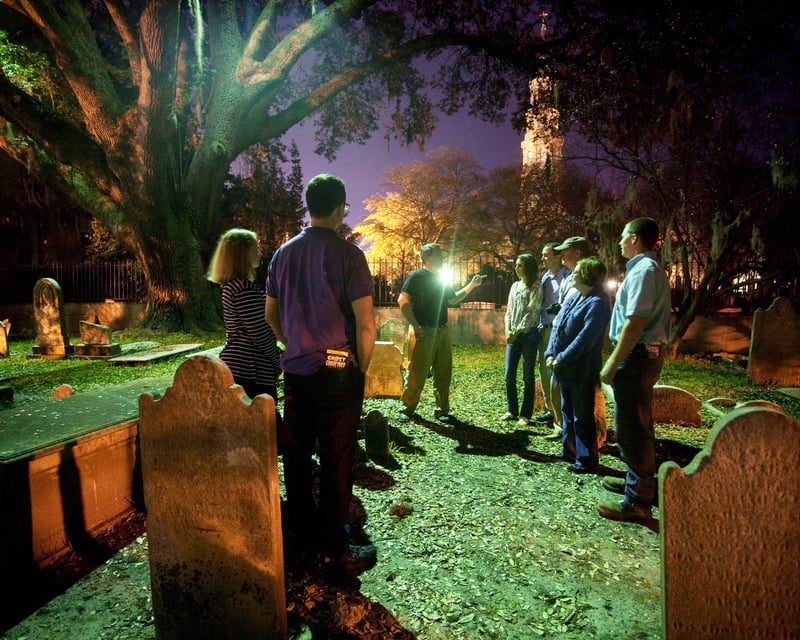
Charleston Ghost & Graveyard Walking Tour
Explore Charleston's oldest graveyard after dark on an exclusive guided walk
Charleston History Walking Tour to Rainbow Row & Battery
Explore Charleston’s past with guides who bring a performer’s touch
Tour South of Broad Homes & Gardens in Charleston
Walk South of Broad with entry to two historic homes and gardens
Historic Charleston Tour of Rainbow Row & the Battery
Discover Charleston's colonial history on foot
Hidden Alleyways Walking Tour of Charleston
See Charleston’s quieter lanes and Lowcountry stories on foot
Seasonal Cocktail Tour in Charleston
Sip curated cocktails and trace Charleston’s Colonial drinking history