Things to do nearKaibab National Forest
Kaibab National Forest in Arizona surrounds the Grand Canyon with dense ponderosa pine woodland, remarkable wildlife, and sweeping high-country trails.
Kaibab National Forest covers roughly 1.6 million acres of the Colorado Plateau in northern Arizona, administered by the U.S. Forest Service and divided into the North Kaibab and South Kaibab ranger districts. The name Kaibab comes from a Southern Paiute phrase meaning mountain lying down, a fitting description for the broad, elevated plateau that defines the landscape. The forest has been shaped by centuries of Indigenous use, early Euro-American exploration, and the conservation policies of the early twentieth century, including the establishment of the Grand Canyon Game Preserve in 1906, which gave the region lasting ecological significance.
Today visitors come to hike, mountain bike, camp, and simply move through one of the most intact ponderosa pine ecosystems in the American Southwest. The South Kaibab district, close to Grand Canyon Village, offers trailheads that connect directly to the national park's rim trails, making it a natural extension of a Grand Canyon visit. The North Kaibab district sits atop the Kaibab Plateau at elevations above eight thousand feet, where aspen groves turn gold each autumn and the silence is nearly absolute.
Wildlife is abundant throughout Kaibab National Forest, including elk, pronghorn, wild turkey, and the endemic Kaibab squirrel. Dispersed camping is permitted across much of the forest, giving travelers a quieter and more immersive alternative to the crowded campgrounds closer to the canyon rim. The combination of ecological richness, historical depth, and sheer scenic grandeur makes Kaibab National Forest a destination that rewards time and attention on its own terms.
7-day forecast
Chance of rainTips for visiting Kaibab National Forest
Visit the North Kaibab unit in late spring or early fall when the roads are open and the meadows are lush with wildflowers and grazing mule deer.
Bring a detailed forest map and a full tank of gas before heading into the backcountry, as cell service is unreliable across much of the forest.
Try the scenic drive along Forest Road 22 on the South Rim unit for panoramic views of the Coconino Plateau without heavy foot traffic.
Watch for the Kaibab squirrel, a species found nowhere else on earth, identifiable by its tufted ears and white tail, most active in morning hours.
Carry at least two liters of water per person on any trail, as natural water sources are scarce and temperatures can shift dramatically between midday and evening.
Top tours & experiences near Kaibab National Forest
Kaibab National Forest Horseback Ride Near Grand Canyon
Slow down and explore pine forest trails on horseback
Grand Canyon Hummer & Airplane Tour
See the Grand Canyon from South Rim overlooks and the air
Trail Ride in Kaibab National Forest Near Grand Canyon
Take a break from sightseeing with a guided forest ride
Grand Canyon South Rim Sunset Hummer & Helicopter Tour
See Grand Canyon South Rim viewpoints at sunset, then soar above the canyon
Kaibab National Forest Horseback Ride Near Grand Canyon
Escape into the forest for fresh air on horseback
Grand Canyon South Rim Sunset Hummer & Airplane Tour
Catch Grand Canyon sunset views by Hummer, then see the North, South and East Rims from the air
Kid-Friendly Horseback Trail Ride near Grand Canyon
Make room for a family trail ride between Grand Canyon adventures
Grand Canyon Hummer & Helicopter Tour
Pair South Rim viewpoints with a helicopter flight over the Grand Canyon
Grand Canyon Train & Hummer Guided Tour
Ride historic rails through high desert, then tour the South Rim by Hummer
Evening Root Beer Wagon Ride in Grand Canyon Village
Settle into a twilight wagon ride through Kaibab National Forest with a frosty root beer
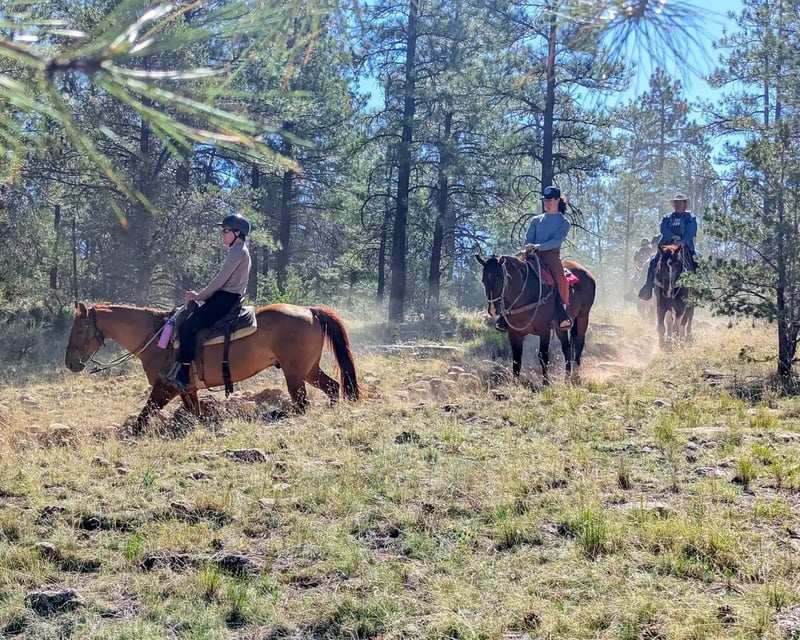
Evening Campfire Horseback Ride in Grand Canyon Village
Ride through Kaibab National Forest, then gather around a campfire with your own cookout